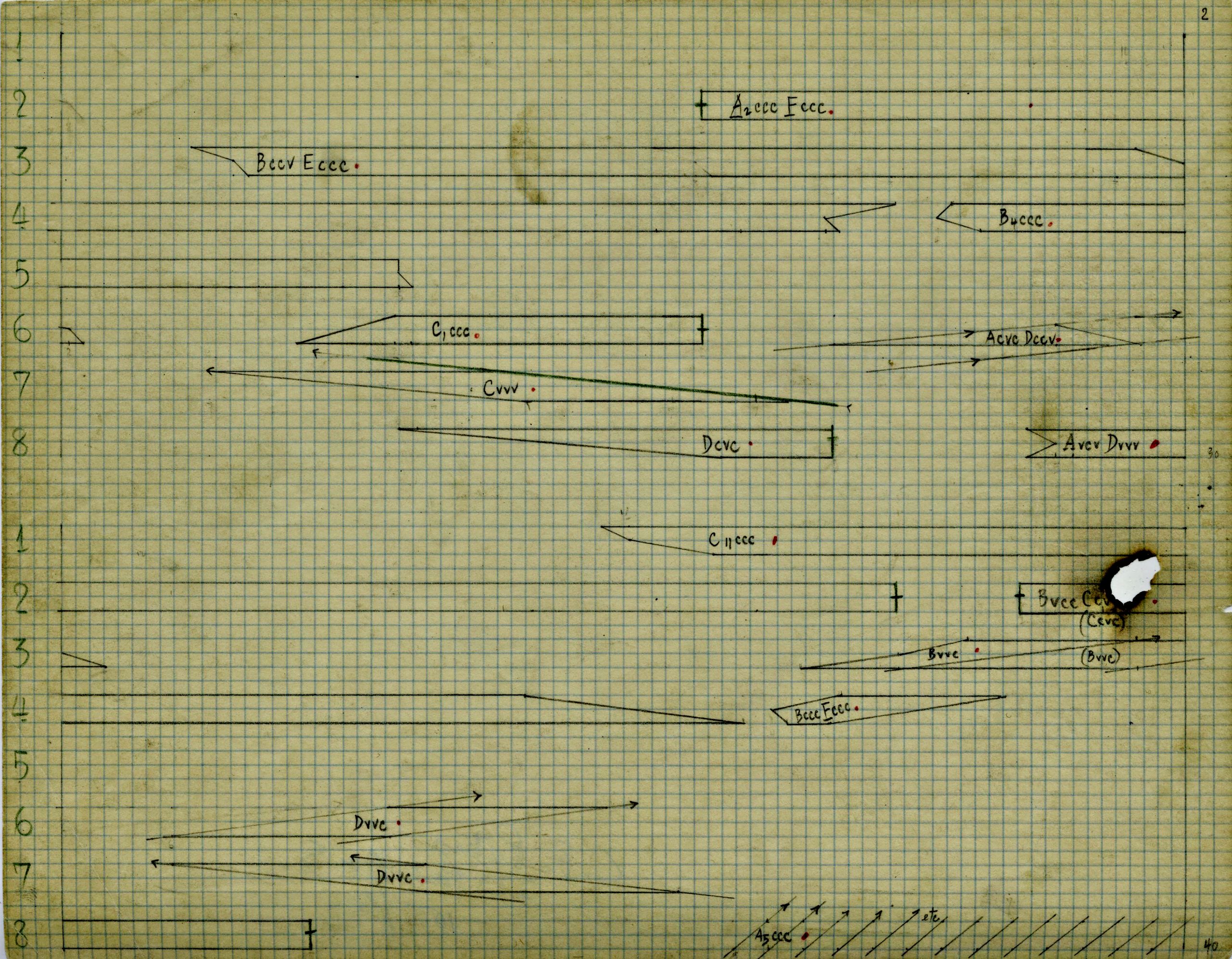
Williams Mix is a 1952 electroacoustic work by John Cage for eight simultaneously played magnetic tapes. The composition was created by Cage and his colleagues: Earle Brown, Morton Feldman, David Tudor and Bebe and Louis Barron.
Sounds were recorded on to magnetic tape which were then organised into six categories:
- A city sounds
- B country sounds
- C electronic sounds
- D manually produced sounds
- E wind produced sounds
- F ‘small’ sounds, requiring amplification
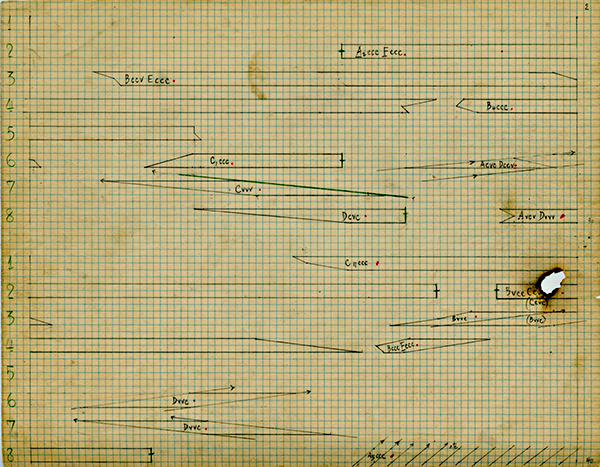
Cage used the I Ching method to evoke ‘elaborate chance’ in order to determine which categories of sounds go together and the modifications applied to each sound. Cage created a graphic splicing score 0f 193 pages, enabling later realisations with different sound libraries:
The work was premiered to mixed reactions on the 23rd March 1953 at the University of Illinois as part of an evening that Cage programmed of music for magnetic tape during the Festival of Contemporary Arts.
Cage’s original work can be hear here.
Later versions of Williams Mix using Cage’s graphic score were created:
- Larry Austin coded software (Williams (re)Mix(er)) based on an analysis of Williams Mix to create new versions of Willams Mix scores (1997-2000).
- In 2012 Tom Erbe recreated Williams Mix from the original score using software.
- In 2024 Medio Mutante produced a new version using tape rather than digital methods.
In 2014 I created my version of Williams Mix, called Mix2014.
Rather than following Cage’s score exactly I took instead the premise of the work. I also collected over 600 sounds, extending a world-wide invitation for people to upload snippets of recordings of their environment. The time of upload and length of submission gave me parameters which I used to evoke a chance method similar to Cage’s I Ching methodology. I allocated sounds across similar categories to Cage.
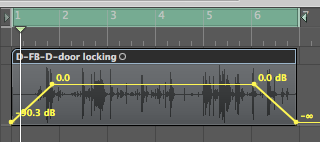
My method of chance parameters instructed where and how to position sound and splicing; this was done across eight digital channels as per Cage’s work. Each sound event was treated as if it were magnetic tape; splices performed manually withing a DAW (digital audio workstation such as Cubase or Logic Pro):
There are differences between my version and the original.
Cage’s tracks were mono; mine are stereo. Modern devices sometimes record in stereo and the majority of submitted sounds were stereo. This changed the overall sound in contrast to the original Williams Mix; I could have processed submitted sounds to mono, but one of my rules was to accept a submission in any format. This change to stereo led to an interesting effect: depending on the listening device some of my sound events appeared weaker or stronger. The stereo field weakened the impact of some quieter or extreme frequency events.
The original Williams Mix has generally more focused, shorter sound events, with more silence. Cage’s work seems more percussive, dynamic, and has a faster flow. My longer sound samples give a slower, continuous, evolving texture. This seems to affect perception; the ear is drawn to follow longer events, searching for narrative or logic. Although performances are identical no two people hear the same thing because they follow different sounds, they listen to what interests them. The sounds are rigid on tape but indeterminacy enters into the actual perception.
Mix2014
My version of Cage’s original Williams Mix